Powering DevOps with Application Release Automation
Power your DevOps processes with application release automation that streamlines the build, test, and deploy phases.

Many organizations today are turning to DevOps to deliver high quality shippable products faster and with fewer bugs. According to research by Gartner, by 2016 DevOps will be a mainstream strategy that will be employed by 25% of Global 2000 organizations.
With widespread DevOps adoption on the rise, application release management software is becoming vital to successful DevOps execution. In fact, Gartner predicts 50% of enterprises will implement automated configuration and release management by 2019.
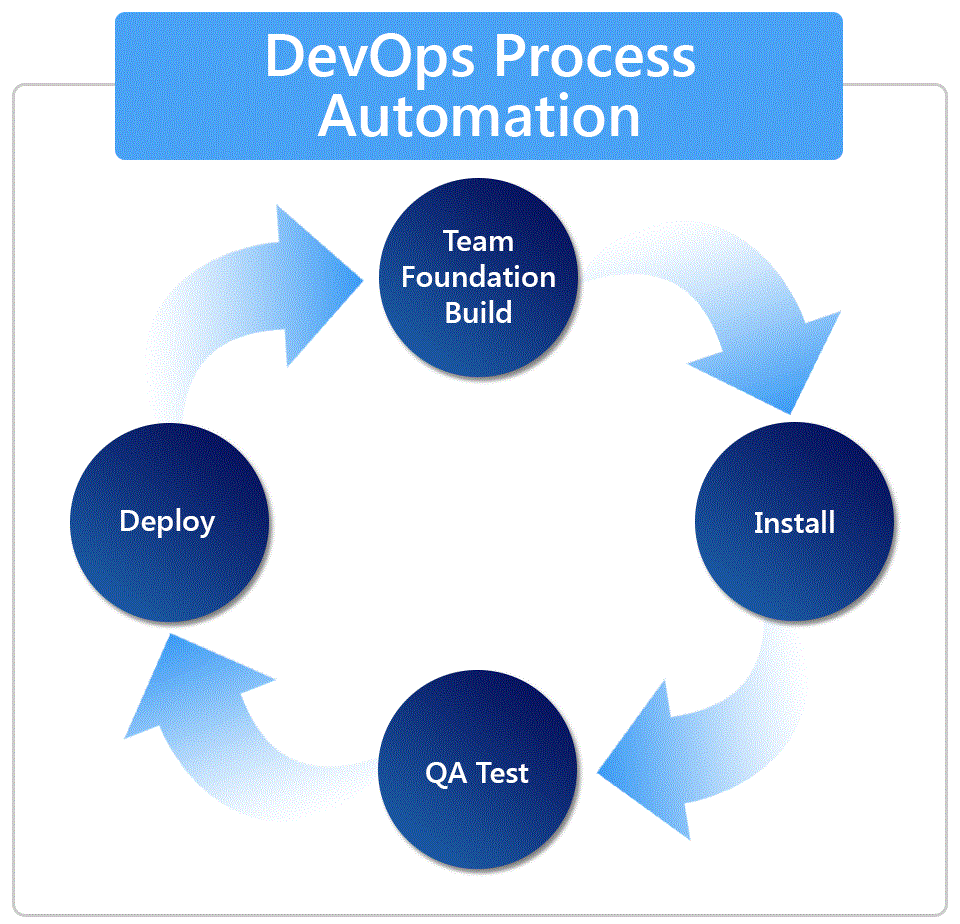
While many organizations implementing DevOps already have some form of automated configuration in place, whether it be a collection of specific application release automation tools or a homegrown system, workload automation is often overlooked in the DevOps arena.
When any new process or technology is added into an organization’s environment, the first instinct is to develop a specific automation method or buy an additional management/automation tool to streamline and simplify the process. However instead of gaining more simplicity and control, organizations are saddled down by both the new technologies as well as the individual automation tools that were brought on to manage the new technologies, resulting in complex silos of automation.
Using modern IT workload automation, organizations can automate their application release processes without requiring multiple point tools or the need to create a homegrown solution. For example, using ActiveBatch’s prebuilt job steps for Microsoft Team Foundation Server (TFS), DevOps teams can create an automated workflow that deploys builds onto machines, installs the build kits onto production environments, ensures installation files are accurate, and then alerts the proper users that the build is ready for testing. Once testing is complete, the workflow will automatically close stories and merge them. Teams can also automate the creation of a new work item in TFS every time QA logs a bug to further simplify the application release process.
In addition to automating the development and testing side of an application release, the multi-faceted nature of workload automation also makes it a great fit for solving challenges faced by Operations. One of the biggest, yet oftentimes ignored problems in application release processes is making sure that testing systems are correctly architected to meet the resource demands of testing new builds. Excessive instances and regression tests can cause machine slowdowns that delay the overall release cycle. Using a modern automation and job scheduling solution, organizations can automate the database purges, increase CPU, and more to ensure systems can meet testing requirements.
Incorporating new methodologies like DevOps is always going to be a challenge for both IT and the business as a whole. However, it’s the way the organization goes about automating and managing these processes that will make or break a company’s implementation of DevOps.